When employees start checking out, the entire team feels it. Tasks may get accomplished, but the creativity, collaboration, morale, and trust at work begin to erode.
In this episode, we discuss the phenomenon of silent quitting, examining its causes and how it erodes trust over time. At home, it may look like going through the motions without emotional connection. At work, it can mean avoiding challenges, withholding ideas, or doing the bare minimum.
By re-engaging, setting aside time to have conversations, showing appreciation, and actively participating in shared responsibilities.
🎧 Take a listen to this episode to see your engagement level and learn more strategies to reconnect with purpose.
From the daily grind of work duties to juggling family time, the daily choices can slowly wear you down and may lead to decision burnout and overwhelm, which is more common than you think.
Decision burnout or overwhelm happens when your mind becomes overloaded with too many decisions to make within a short period.
As time goes on, you may be experiencing:
Irritable with making decisions
Procrastination or Avoidance of making decisions
Overwhelmed by making decisions
Taking occasional breaks or going for a brisk walk can help.
Affirmation:I allow myself to pause before making decisions.
We often find ourselves caught in routines and expectations that once worked for us, but no longer do.
This video is an invitation to pause and reflect: Does the way I work still feel true to who I am?
The Reiki principle: Just for today, I will do my work honestly, isn’t just about avoiding deceit; it’s about doing honest work in a way that feels true to you, your values, and your purpose. It’s about giving your best from a place of integrity, not exhaustion.
We often think of honesty as something we give others. However, honesty with ourselves means admitting that our current work is draining us or realizing that a new direction may be calling.
Honest work doesn’t mean perfect work; it means showing up fully and truthfully, both to yourself and to others.
If you’re feeling unfulfilled or disconnected at work, feeling burned out, or simply longing for deeper meaning in your job, you deserve work that feels good to you, not a jaded version. Sometimes honesty means admitting something needs to change.
I would love to hear your thoughts. What does honest work look like in your life right now? Leave a comment below.
Have you ever looked around at home and work and felt alone in your effort?
You plan the meetings. You do the dishes. You check on your co-worker, friend, or parent. And sometimes, you wonder: Why does it always fall on me?You’re not alone in this feeling.
In our newest episode of Building Better Relationships at Home and Work, Angela and I explore the “someone else will do it” trap that so many of us have experienced, whether consciously or not.
In this post, you’ll find the full video, a guided reflection, affirmations to support your emotional peace, and a simple practice to use anytime anger starts to rise.
In this gentle reflection, I explore another Reiki principle:
Just for Today, I Will Not Be Angry.
We’ll talk about how anger often shows up when we feel unseen, unheard, or overwhelmed, and how Reiki helps us lovingly release it. Whether the frustration is your own or something you’ve picked up from others, this principle reminds us we have a choice.
And in leadership, whether at home or work, clarity is everything. This Reiki principle reminds us that we can lead with calm, not chaos.
🌬️ Just for today, return to calm.
How does anger show up in your life, and how do you release it? I would love to hear your reflections in the comments below. 🦋 ~ Patti
Are you feeling overwhelmed, overstimulated, or simply longing for a moment of stillness? This video is for you.
In this affirmation and coaching session, I gently guide you through a mindful reminder:
🦋 “I choose to schedule time to unplug each day.”
Why Unplugging Matters More Than Ever
When we’re always “on,” it’s easy to lose touch with:
Our energy levels
Our priorities
Our ability to be fully present
The choice to unplug, even for a few minutes, helps quiet the noise and nurture the calm within.
Gentle Ways to Make Unplugging a Daily Habit
Unplugging for five minutes can reset your nervous system.
Pick a consistent time – Mornings or evenings.
Create a calm space – Light a candle, play soft music, or take a slow breath.
Add unplugging to your calendar.
When you unplug, you’re not tuning out. You’re tuning in to peace, clarity, and balance.
💬 Self-Reflection:
👉 What’s one small way you can unplug Today and reconnect with what truly matters?
🎙️ Thanks for watching this video. Please like, comment, share, and subscribe. 🙂
🦋 Hi, I am Patti Oskvarek of Coaching For Inspiration with Patti. I’m a Leadership, Work-Life Balance, and Life coach, as well as a Reiki Master, who helps individuals achieve their dreams, goals, and aspirations, and live more purposeful and balanced lives outside of work.
I share strategies for achieving work-life balance, practical work and life tips, work-life balance affirmations, building better relationships, navigating leadership situations, and more.
✨ Want To Work With Me ✨
If this resonates with you and you’d like a little more calm in your week, there’s a link below to explore further.
In a world that promotes hustle and constant doing, I am sharing this Affirmation as a gentle reminder that peace is a choice and a strength.
As inspiring leaders, we don’t have to push ourselves to the edge to make an impact. We can rise higher when we lead from a calm place, when we choose clarity over chaos and stillness over burnout.
💫 Affirmation:
“I choose peace over pressure.”
Say it slowly. Breathe it in. Let it soften the tension in your shoulders. This simple phrase holds powerful energy. It reminds us that peace is always an option, even in the midst of deadlines and decision-making.
Take a moment to breathe, reset, and return to what truly matters.
These few seconds of calm can shift your entire day.
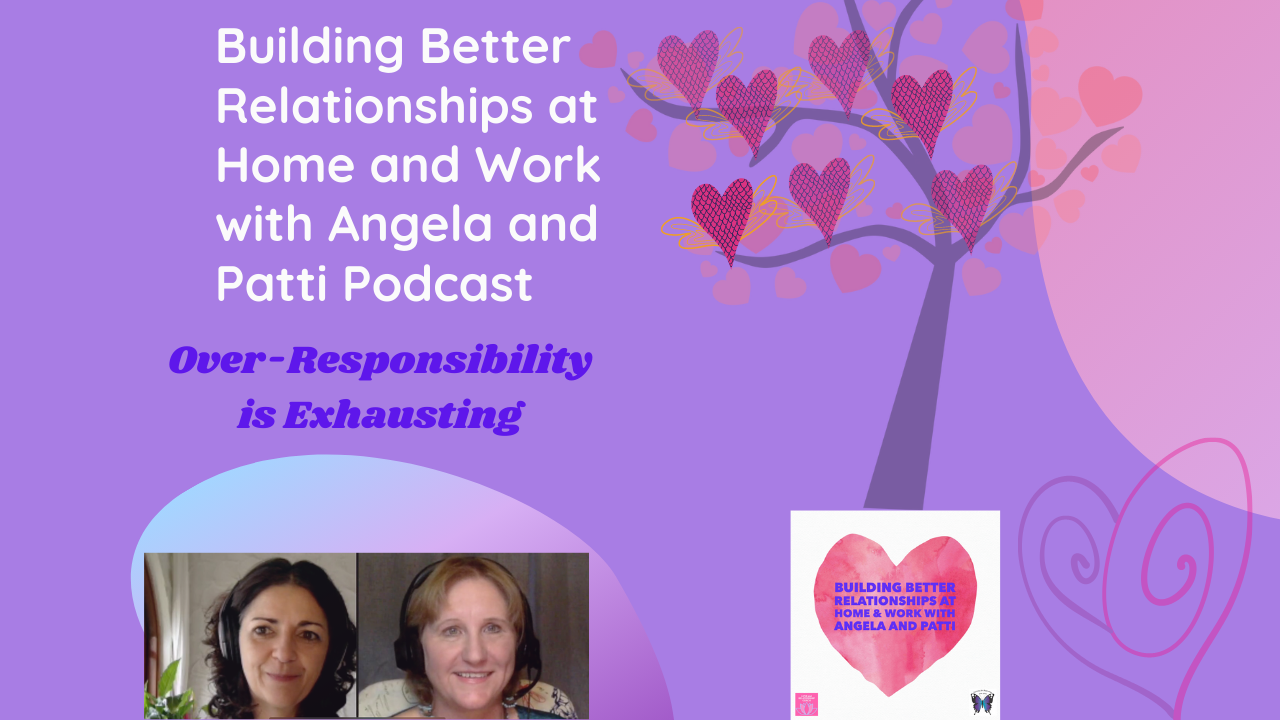
In this episode, we’re exploring something so many of us quietly struggle with: the habit of over-responsibility.
We might feel like the one who’s always holding it all together in life, work, and relationships. But here’s the truth: we were never meant to carry it all.
✨ We don’t have to over-function to be valuable. ✨ We don’t have to say yes to everything to be loved.
Let this episode be a gentle reminder that healing begins with letting go and that healthy, balanced relationships are possible when you lead with love and boundaries. ❤️
🎙️ Thanks for listening. Please like, comment, share, and subscribe.
In our fast-paced world, it’s easy to fall into the habit of simply getting through the day, moving from one task to the next, always busy but rarely fulfilled. As a Leadership and Work-Life Balance Coach, I see amazing, hardworking people feeling like life is passing them by.
🦋 Work-life balance isn’t a destination; it’s in the little moments.
We will explore and reflect on this powerful Work-Life Balance Affirmation:
“I am creating happy moments and memories.”
This affirmation is more than words—it’s a call to pause, breathe, and truly live.
When was the last time you let yourself enjoy something simple?
A walk, a call with a friend, laughing, or being still are the moments that refill you and help you stay grounded in joy.
In the video, we explore:
How small joys help shift our mindset and energy
Why do we often forget to create happy memories
Simple ways to invite more peace and presence into your day
A gentle challenge to help you live with more intention today
What’s one happy moment you’ve created recently or would like to make this week?
🦋 Share it in the comments—I would love to hear your heart and celebrate your joy.
👉 About Patti
🦋 Hi, I’m Patti Oskvarek of Coaching for Inspiration with Patti. I’m a Leadership, Work-Life Balance, and Life coach who helps individuals achieve their dreams, goals, and aspirations and live more purposeful and balanced lives outside of work.
I share strategies for work-life balance, work and life tips, work-life balance affirmations, building better relationships, navigating leadership situations, and more.
We all have moments where we try to manage every detail, every person, every outcome. But when we’re in that “control mode,” we lose something important:
🦋 Our peace
🦋 Our passion
🦋 Our joy
Trying to force things to go our way often blocks what we’re working hard to create.
When we let go, life starts to flow.
Letting go doesn’t mean we stop caring or trying. It means we release the grip on things that were never ours to control in the first place.
Instead, we start asking better questions:
What can I do today that feels aligned and peaceful?
What am I holding onto that’s draining my energy?
How would it feel to trust the process for a change?
When I choose to let go, I find myself feeling more:
🦋 Motivated
🦋 Positive
🦋 Open to growth and new possibilities
Sometimes, what we think we need or want isn’t good for us. When we loosen our grip, we create space for something better, something we had never even imagined possible.
Letting go helps us make room for transformation, whether in our relationships, work, or personal growth.
Self Reflection:
What’s one thing you’ve been trying to control lately that’s not working?
What would happen if you let it go, even just a little?
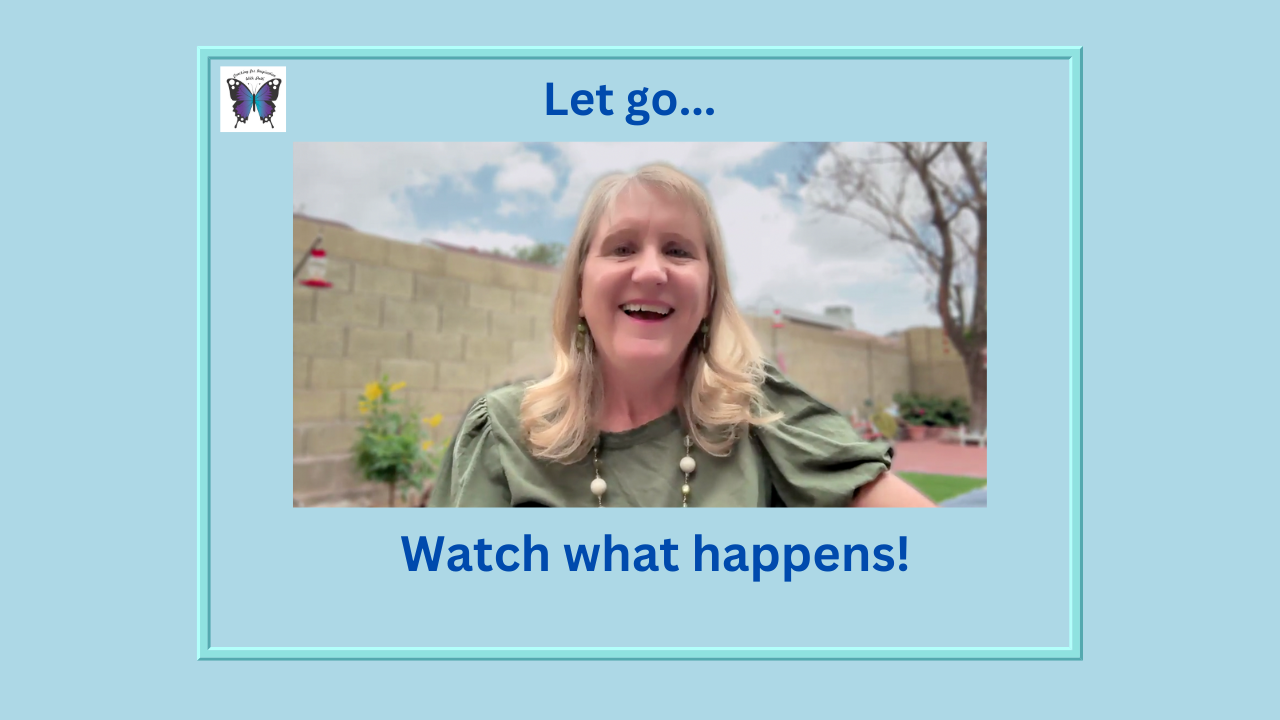
✨ “Let go… and watch what happens.”
I invite you to take a breath today, let go of what’s heavy, and trust that something beautiful may unfold even if you can’t see it yet.
💬 Share Your Thoughts
I would love to hear from you. What are you letting go of today?
Leave a comment below. Let’s support each other on this journey of letting go.
👉 About Patti
🦋 Hi, I’m Patti Oskvarek of Coaching for Inspiration with Patti. I’m a Leadership, Work-Life Balance, and Life coach who helps individuals achieve their dreams, goals, and aspirations and live more purposeful and balanced lives outside of work.
I share strategies for work-life balance, work and life tips, work-life balance affirmations, building better relationships, navigating leadership situations, and more.