There is something comforting about knowing you don’t have to want the same things forever.
Our lives change.
Our circumstances change.
And sometimes, we change.
The career that once excited you may no longer feel like the right fit. The priorities you had a few years ago may have shifted. Or perhaps you are beginning to realize that the life you thought you wanted isn’t the life you want anymore.
And that’s okay.
You Don’t Have to Stay With an Old Version of Yourself
Sometimes we hold onto old decisions because they feel connected to who we are.
“This is the career I chose.” “This is what I’ve always wanted.” “I can’t change my mind now.”
But you can.
Changing your mind doesn’t mean you failed.
It doesn’t mean your previous decision was wrong.
It may mean you have new information, new experiences, or different priorities.
You are allowed to respond to where you are today.
Maybe Your Definition of Success Has Changed
Success isn’t always about moving higher, earning more, or taking on greater responsibility.
Sometimes success looks like having more time.
More balance.
More meaningful work.
More energy for the people and things that matter to you.
The definition of a fulfilling life can change as we move through different seasons.
And you get to decide what success means for you.
If something in your life isn’t working the way it once did, you don’t necessarily need to make a big decision right away.
Ask yourself:
What do I want now?
Not what did I want five years ago.
Not what does everyone else think I should want.
Not what looks good on paper.
What do I want now?
That question can open the door to possibilities you may not have considered before.
Your Life Is Allowed to Evolve
You don’t have to have your entire future figured out.
You can change direction.
You can try new things.
You can decide that your priorities are different.
You can change your mind.
And you can build a life that reflects who you are today, not who you were when you made your last big decision.
🦋 Let’s Pause and Reflect
Where in your life are you holding onto an old decision, expectation, or definition of success?
What might happen if you permitted yourself to reconsider?
You don’t have to know all the answers yet.
Just let yourself explore.
If you’re thinking about a career change, want more balance, or are simply wondering what’s next, I would love to explore what’s possible with you.
Have you ever worked hard to build a life, only to realize that the life you created may not be the one you want anymore?
Perhaps you chose a career, earned a degree or certification, developed your skills, and invested years of time and energy. Your work may provide financial security. You may be good at what you do. And your career may have become a significant part of your identity.
But something feels different.
The work that once seemed like the right choice may no longer bring you the satisfaction you expected. You might find yourself dreading Monday mornings, wondering what happened to your enthusiasm, or thinking about what else you could do.
And yet, you keep going.
Why? Because you’ve already invested so much. Because you’re good at your job. Because it pays the bills. Because you believe you are supposed to do it.
But what if you paused long enough to ask yourself a different question?
Is this still the life I want to maintain?
When the Life You’ve Built No Longer Fits
It’s natural to keep going down a familiar path. We make decisions based on what we know at the time, the opportunities available to us, and what we believe will create a good future.
Sometimes, those choices work out beautifully. Other times, we discover new things about ourselves along the way.
Our interests change. Our priorities shift. We develop skills we didn’t know we had, or we discover that something we once dreamed about doesn’t suit us as we expected.
That doesn’t mean the years we’ve invested were wasted. They helped shape our experience, knowledge, and abilities.
It simply means what worked for us in the past may need reconsideration today.
And this isn’t just about a career. It could be a routine, a commitment, a role you play in your family, or a lifestyle you’ve maintained for years.
You can appreciate what you’ve built and still want something different.
Are You Staying Because You Want To, or Because You’ve Already Invested So Much?
One challenge of considering change is how much time, effort, and money we’ve already invested.
You might think:
I’ve spent years getting qualified for this career.
I’m good at what I do, so I should keep doing it.
This job provides financial security.
I don’t know what else I would do.
It’s too late to start something new.
These thoughts are understandable. Financial responsibilities, family commitments, and other practical considerations matter. Making a major change deserves thoughtful consideration.
But the time you’ve already invested doesn’t have to dictate every future decision.
Explore Before You Make a Major Change
If you’re considering a different career or professional direction, you don’t have to leap into the unknown without learning more.
Start by gathering information and exploring what a different path might look like.
Talk with people doing the work. Ask about their typical day, what they enjoy, what they find challenging, and what skills the job requires.
Look for opportunities to gain experience. Depending on the field, volunteering, job shadowing, taking a class, or working on a small project may help you understand whether the work interests you.
Consider your strengths and interests. What kinds of tasks engage you? Do you enjoy working with people, solving problems, creating something new, organizing projects, or learning new skills?
Think about practical considerations. What training, financial resources, time, or support might you need? What could you explore while keeping your current responsibilities in mind?
Create a plan. You may stay where you are, adjust your current role, or work toward a different opportunity. Gathering information can help you make a decision that fits your circumstances.
You may discover that the new path is exactly what you’re looking for. Or you may realize that what you have is a good fit after all, with a few changes that would make your day-to-day life more satisfying.
Either way, exploring helps you make a more informed choice.
What If You Don’t Need to Change Everything?
Sometimes, when we’re unhappy or feeling stuck, it can feel like our only options are to keep everything the same or start over completely.
But there may be another way.
Perhaps you enjoy your profession but need a different role, a new challenge, more flexibility, or a healthier work-life balance.
Perhaps you want to use your existing skills more creatively. Or maybe you need to revisit your priorities and make more time for the people and activities that matter to you.
Small changes can be worth exploring, too.
Ask yourself:
What part of my life is working well?
What would I like to be different?
Is there something I can change within my current circumstances?
What is one step I could take to learn more about my options?
You don’t need to have every answer today. You can begin with one question and take the next step when you’re ready.
Stay, Change, or Explore Something New?
When you think about the life you’re maintaining, consider three possibilities.
Stay. You may decide that your current career or lifestyle still works for you. You can appreciate that choice and continue building on what you’ve created.
Make changes. You may enjoy much of your life but recognize that certain things need to improve. Consider what you could adjust to make everyday life feel more balanced and satisfying.
Explore something new. You may discover you’re ready to go in a different direction. Start learning about the possibilities and create a thoughtful plan that considers your goals and responsibilities.
There isn’t one right answer for everyone. Your circumstances, needs, and priorities are your own.
The important thing is to decide thoughtfully, rather than assuming you have to keep living the same way simply because that’s what you’ve always done.
A Moment to Pause and Reflect
As you think about creating more balance in your life, take a moment to consider this question:
What if you don’t actually want the life you’ve been working so hard to maintain?
What comes to mind?
Is there a career you’ve been questioning? A routine that no longer suits you? A goal that once mattered but no longer reflects your priorities?
You don’t have to rush to an answer. Give yourself time to consider what is working, what you’d like to improve, and what possibilities you might explore.
Creating more balance can begin with recognizing that you have choices. Some changes may be small. Others may take time and planning. And sometimes, after reflecting, you may decide that staying where you are is the right choice.
What matters is that you’re making decisions based on what fits your life today and what you want for your future.
Let’s Explore
If you’re thinking about your career, work-life balance, or what comes next, coaching can help you explore your options, reflect on your priorities, and identify practical steps forward.
I would love to hear your thoughts: Is there a part of your life you’d like to change, explore, or improve? Share in the comments.
Until next time, keep exploring life and work, creating more calm and balance, and building a life that’s meaningful to you. 🦋
We spend a lot of time measuring success by what we accomplish, what we own, the goals we reach, and how our lives look from the outside.
We celebrate promotions, career achievements, milestones, and the things we have worked hard to earn. And those accomplishments can be wonderful.
How does life feel while we are living it?
Sometimes, life looks wonderful on paper.
You may have a successful career, financial stability, a comfortable home, and accomplishments you are proud of. You have worked hard, met expectations, and reached goals you once set for yourself.
Yet something doesn’t feel quite right.
Perhaps you are exhausted from constantly working toward the next milestone. Maybe you spend so much time meeting responsibilities that you have little time left for yourself. Or maybe the career or lifestyle you once wanted no longer feels as fulfilling.
You might wake up thinking, “Here we go again,” rather than feeling excited about the day ahead.
These feelings can be confusing, especially when you know you have many things to be grateful for.
But gratitude and dissatisfaction can coexist. You can appreciate what you have while recognizing that you want something in your life to change.
That feeling doesn’t automatically mean you need to make a dramatic decision. It may mean pausing to explore what’s important to you now.
Has someone ever said something that made you question something you loved doing?
Recently, I was watching a television show called Best Medicine, and one of the storylines really made me stop and think.
A character named Elaine is passionate about her YouTube show. She loves creating it, and people enjoy watching it.
Then someone makes a harsh and judgmental comment about her show.
The words affect Elaine so deeply that she stops doing something she truly loves.
As I watched, I started thinking about how often something similar happens in real life.
How Much Can One Comment Affect Us?
Sometimes someone says something about our dream, our work, our creativity, or something we’re passionate about.
Maybe they don’t understand it.
Maybe they don’t like it.
Maybe they have a very different opinion.
And sometimes their words stay with us.
We may begin questioning ourselves.
We may lose confidence.
We may stop sharing our ideas.
And sometimes, we may even stop doing the thing we loved in the first place.
That’s what made Elaine’s story stand out to me.
How many of us have had something like this happen?
Maybe it wasn’t a YouTube show.
Maybe it was a career choice.
A business idea.
Something creative.
A personal goal.
Or simply something that brought you joy.
But There Is Another Side
While thinking about this, I also started thinking about our own words.
Have we ever said something that affected another person more than we realized?
Sometimes we don’t intend to hurt someone.
We may simply be sharing our opinion.
We may think we’re being honest.
We may not understand why something matters so much to the other person.
But our words can still have an impact.
That doesn’t mean we can never disagree with someone or offer feedback.
It simply gives us something to think about.
How are we communicating with the people around us?
And what might they be taking away from our words?
What If It’s Time to Rekindle Something?
If someone else’s criticism has caused you to step away from something you once loved, I want to invite you to think about it again.
Is the passion still there?
Do you still think about it?
Do you still wish you were doing it?
If the answer is yes, it may be worth exploring.
You don’t have to return to it exactly as you did before.
You might approach it differently.
You might make some changes.
Or you might start again.
Someone else’s opinion is their opinion.
It doesn’t have to determine what you do with your life.
Many other people may appreciate what you do.
And just as importantly, you may still love doing it.
Self-Reflection and Journal Prompts:
Here are a few questions to think about:
🦋 Has someone’s criticism ever caused you to stop doing something you loved?
🦋 Is there something you have thought about returning to?
🦋 What would it feel like to explore that passion again?
🦋 Have you ever said something that you now realize may have affected someone else’s confidence or their willingness to pursue something important to them?
We all have opportunities to learn from our experiences.
Sometimes the reflection itself can help us see something differently.
Maybe you have set aside a dream, passion, or goal because of someone else’s words.
Maybe it’s worth taking another look.
Maybe it’s time to rekindle something that still matters to you.
When Is It Time to Walk Away From a Job or Relationship?
Sometimes, we know something isn’t working anymore.
Maybe it’s a job that leaves you drained and dreading Monday.
Maybe it’s a relationship where you no longer feel respected, supported, or even like yourself anymore.
And yet, knowing something isn’t right doesn’t always make it easy to walk away.
We may stay because of fear, security, history, guilt, or hope that things will change for the better, but they never do.
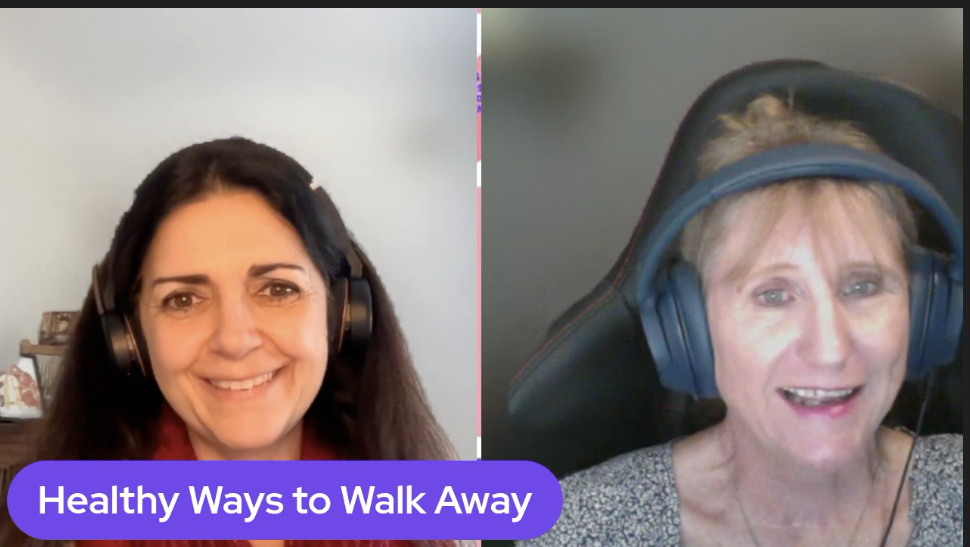
One question from Episode 101 of Building Better Relationships at Home and Work with Angela and Patti really stood out to me:
Am I staying because this is right for me today, or because it was right for me yesterday?
Sometimes the answer isn’t about leaving. It may be about looking at what’s happening, setting boundaries, having a difficult conversation, or deciding what you want to help make the best decision for you.
🦋 Let’s Take a Pause and Self-Reflect or Journal:
If you’re thinking about a relationship, job, or situation in your life, take a few moments to reflect:
What relationship or situation have I outgrown?
What would happen if I walked away?
What kind of relationship or life do I want to create?
You don’t have to decide immediately. Sometimes, giving yourself time to pause and explore is the first step toward deciding.
Watch or Listen to Episode 101
In this podcast episode, Angela and I explore when it may be time to stay, when it may be time to make changes, and when it may be time to walk away from a work or personal relationship.
We also share healthy ways to leave, create a transition plan, exit plan, deal with mixed emotions, and find closure when we don’t get the ending we hoped for.
Sometimes walking away isn’t closing a door on someone else.
Sometimes it’s opening a door to yourself.
Watch or listen to Episode 101 – When to Walk Away from a Work or Personal Relationship (And How).
If this topic resonates with you, I hope you will take a few minutes to watch or listen and explore what may be possible for you.
Podcast Episode Affirmation:
“I release relationships and situations that keep me stuck and unhappy and keep those relationships that bring me joy, peace, calm, growth, confidence, love, trust, and hope.”
BBR Intro and Outro video made in @headlinerapp The welcome and thank you graphic videos were made in @Canva
Disclaimer: This content is for educational and informational purposes only and is not a substitute for professional medical, mental health, legal, or financial advice. Please seek appropriate professional support for your individual circumstances.
Hi, I wanted to share about why I love coaching so much and I love coaching work.
The reason why I love it so much is because when I see my clients succeeding in what they really want in life, it brings so much joy to them as well as to me.
I’m going to give you an example. I had a client that she was getting ready to go on a trip solo, and she hadn’t gone on a trip on an airplane for 20 years.
And she was experiencing fear of the technology, fear of going alone, fear of anxiety of the trip. And she was going to see her daughter. So it was very important that we work together to get her over the fear and to have a plan of action to take to go on this trip.
So we started with talking about her anxiety and fear of going on the trip because she was really ready to back out.
So I helped her download the apps and plan her route, plan everything to help her feel confident and comfortable going. So we did all of these different techniques and was able to get her to feel comfortable and go on the trip.
And when she came back, she was so happy that she went and she now knows that she can go on the trip again by herself. I wanted to share this because so many times we think we can’t do something and it holds us back.
But if you find the way to confidently do it, and have somebody to help you. You can succeed in what you want. And she did. She learned how to put apps on her phone. She learned how to use them. She learned how to get to the airport, where to park, how to pull up her ticket on the app, and to go through the checkout and everything and able to change planes if needed.
All of those things brought her confidence with technology, as well as confident in herself to be able to travel solo.
I just wanted to share that today as inspiration that sometimes we hold ourselves back, but we can do things that we didn’t think that we could.
Self-Reflection or Journal Question:
Take a moment to think about something that you have been holding back from doing.
What steps you could do, to make it happen?
If there’s something you’ve been wanting to accomplish but fear, uncertainty, or self-doubt has been getting in the way, coaching can help you turn that goal into manageable steps and move forward with greater confidence.
Sometimes people come to me because they’re feeling stuck and aren’t sure what they want next.
Sometimes they’re trying to create more balance between work and life.
Sometimes they’re working through a career decision or growing into a leadership role.
And sometimes they simply need time to slow down and reset.
That’s what I do.
I’m a Leadership, Work-Life Balance, and Life Coach, and I’m also a Reiki Practitioner. I work one-on-one with people who want support as they move forward, reach their goals, create more balance, and build a life that feels purposeful and meaningful.
Coaching:
Coaching can be helpful when you’re navigating a career decision, working toward a personal goal, looking for more balance, or growing as a leader.
My coaching work includes:
Leadership coaching
Work-life balance coaching
Life coaching
Career and personal goal support
Reiki:
Reiki offers another way to slow down and reset.
Sometimes we simply need time to step away from the busyness of everyday life, relax, and give ourselves a chance to pause.
If you’re looking for support through coaching or would like to experience Reiki, you can book a session using my online booking link below.
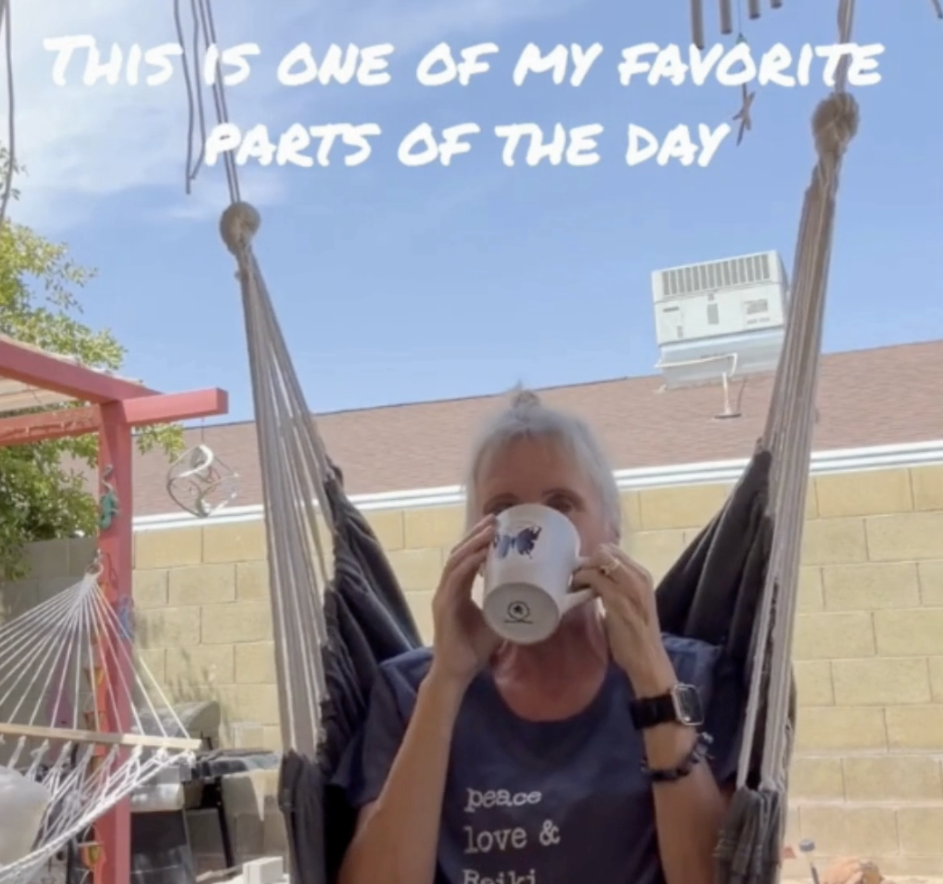
☕ One of my favorite parts of the day is enjoying my coffee outside on my patio. 🦋
This is one of my favorite places to slow down, relax, and enjoy a little quiet time. I might listen to a meditation, an audiobook, or nothing at all. Sometimes, just sitting quietly with my coffee is exactly what I need.
🦋 What is one of your favorite things to do each day that helps you feel happy and calm?
Share it with me in the comments. I would love to hear what brings a little more calm into your day. 🦋
P.S. Sorry the audio is a little echoing. 🦋
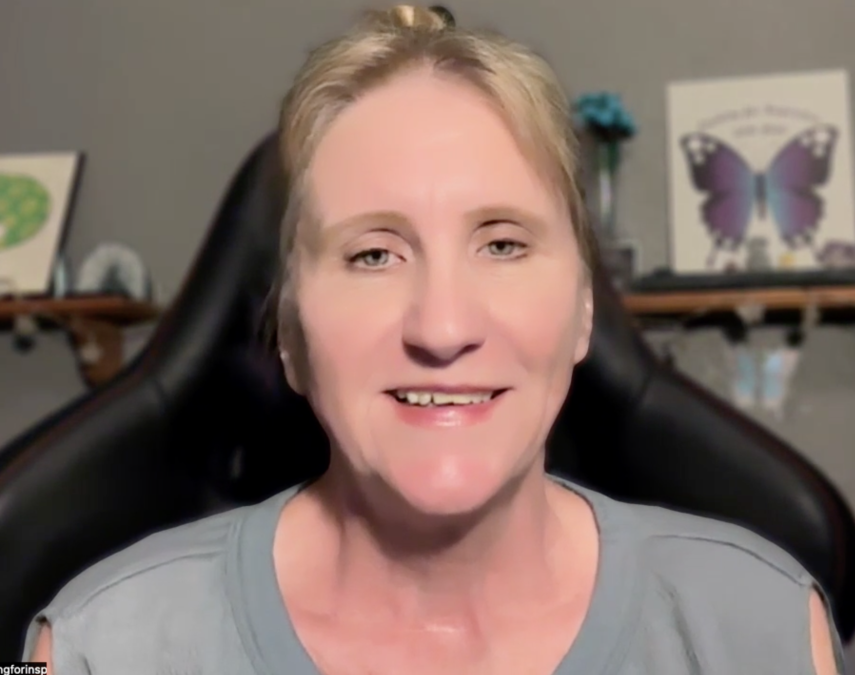
🦋 Hi, I am Patti Oskvarek of Coaching For Inspiration with Patti. I’m a Leadership, Work-Life Balance, and Life coach, as well as a Reiki Master, who helps individuals achieve their dreams, goals, and aspirations and live more purposeful, balanced lives outside of work.
I share strategies for achieving work-life balance, practical work and life tips, work-life balance affirmations, building better relationships, navigating leadership situations, and more.